
Search Results for

June 13, 2022
Toni Aguilar Rosenthal Mekedas Belayneh
Blog Post Food and Drug AdministrationGovernment CapacityIndependent Agencies
The Decades-Long Food Failure at the FDA
In 2008, a deadly salmonella outbreak from contaminated peanut products killed nine and sickened over 700 people. In the aftermath, the peanut executives who poisoned people with food they knew was contaminated received decades-long prison sentences, an all-too-rare case of a corporate criminal being held responsible for the harm they caused. Contemporary public outrage also helped to fuel a push for more structural reform to the food safety regulatory system as a whole. Shortly after the outbreak, the Obama administration began whipping bipartisan congressional support for the Food Safety Modernization Act (FSMA), which sought to prevent future food safety crises by expanding and strengthening the Food and Drug Administration’s (FDA) authority over food. FSMA ultimately passed both the Senate and the House by wide margins and enjoyed broad public support when finally enacted in 2011.
June 13, 2022
Almost Half Of U.S. Attorney’s Offices Have No Permanent Nominee. Where’s Biden’s Urgency?
This month President Biden nominated five additional people to helm the 93 districts of the Office of the United States Attorney. These five nominees brought Biden’s total nominations for the office up to just 53 out of 92 nominees for the office, or a little more than half. The vast majority of these nominations have occurred in states with a Democratic Senatorial delegation with many of these seats held hostage by Republicans wielding a racist Senate tradition to arbitrarily obstruct the process and these crucial seats nationwide. Now, nearly a year and a half into Biden’s presidency, the fact that almost half of these positions are still left without a nominee is a glaring indictment of Biden’s failure to prioritize these critically important positions.
May 11, 2022
House Oversight Hearing Shows Why Attacking Corporate Villainy Needs To Be A Priority
The hearing was a golden opportunity for Congress to actually hold a corporation to account for its objectively horrendous and potentially illegal behavior. On an ostensibly bipartisan issue like the opioid epidemic, one could be forgiven for thinking that the hearing would do just that.
May 10, 2022
The IRS Has Finally Been Given The Power to Rebuild. It’s Not Enough.
In March, six months after the start of Fiscal Year 2022, Congress finally passed an omnibus funding agreement that brought agencies out from under the shadow of Trump-era austerity (although still fell far short of enacting the funding levels that most agencies require to meet their responsibilities to the public). Critically, in the case of at least one agency, the omnibus did not just grant the money to hire new staff, but the means to do so much more quickly. At the Internal Revenue Service (IRS), Congress greenlit the use of direct hiring authorities to empower the agency to temporarily forgo some of the more onerous aspects of the federal hiring process as well as to facilitate a quick rebuilding of the IRS’ notoriously depleted ranks. With this designation, Congress acknowledged that staff shortages at the IRS had reached a state of emergency and thus acted accordingly.
April 28, 2022
Who Is The IRS’ Chief Counsel? Under Biden, No One.
enforcing the U.S. tax code. Much has been written regarding the IRS’ gutting over the years. The agency has been systematically defunded, deresourced, and attacked by political operatives for decades, at a grave cost to the basic functionality of our government, and to the benefit of only the richest Americans. These trends were only exacerbated under the Trump administration, which was hyper-focused on dismantling the tax system to benefit its corporate and billionaire cronies. Unfortunately, the Trump administration’s destructive influence remains pervasive throughout the IRS, with Trump’s Commissioner, Charles Rettig, still installed as the governing head of the agency while finishing a 5-year term (at the pleasure of the president) set to expire in 2022.
March 03, 2022
Revolver Spotlight: Michael Easley Jr. and the Office of the U.S. Attorneys
As officers with extraordinary latitude and immense authority within their districts, U.S. Attorneys have the ability to implement ambitious reforms to the federal legal landscape in a direct and immediate fashion. U.S. Attorneys also have incredible freedom to reorient the undercurrent priorities of the federal legal system and to center historically under prosecuted, but systemic nonetheless, crimes such as corporate and white collar malfeasance. Because of the incredible potential of the position, it is critical that these offices are prioritized in Biden’s staffing of the federal bureaucracy. However, as we have examined previously, the Biden administration has proven remarkably slow in its nominations process for U.S. Attorneys positions, seemingly in part due to an unwillingness to decisively abandon deference to a racist Senate decorum procedure known as blue slips.
March 02, 2022
Dylan Gyauch-Lewis Max Moran Toni Aguilar Rosenthal
Blog Post Corporate CrackdownEthics in GovernmentExecutive BranchFederal ReserveFinancial RegulationIntellectual PropertyRevolving DoorTech
What Can Biden Actually DO From His State Of The Union?
Biden is still married to reviving a long-lost vision of bipartisanship. Never mind that the same Republicans he’s desperate to welcome into the fold literally did not applaud the ideal of bipartisanship he is pushing.
March 02, 2022 | Revolving Door Project Newsletter
Dylan Gyauch-Lewis Max Moran Toni Aguilar Rosenthal
Newsletter Corporate CrackdownDepartment of JusticeEconomic PolicyFinancial Regulation
What Can Biden Actually DO From His State Of The Union?
If there’s one thing the readers of this newsletter definitely haven’t read yet today, it’s a reaction to last night’s State of the Union address.
Like many, we were hoping to see President Joe Biden adopt a new overall message to the American people as his poll numbers have sagged and Democrats brace for a rough midterm election in just eight short months. We’ve been making our pitch for the last few months about what that message should be: Biden ought to use his powers to crack down on corporate villains, and heavily publicize doing so. The ubiquity of already unpopular enemies and latent presidential powers gives Biden the chance to clarify to the public what exactly he stands for. Our Jeff Hauser and Max Moran laid out the case for this “Corporate Crackdown” message in Democracy Journal in January.

February 17, 2022
Dino Falaschetti and the Decimation of the OFR
The Office of Financial Research (OFR) was established by the Dodd-Frank Wall Street Reform and Consumer Protection Act in 2010. Charged with providing data, analysis, and research regarding systemic financial risks to the members of the Financial Stability Oversight Council (FSOC), OFR is an integral part of the federal infrastructure for safeguarding financial stability. OFR, while not itself a regulatory body, investigates systemic risks, standardizes the data used across government, and can offer financial regulators a more robust empirical base from which to devise regulations. OFR was designed to address the proven inability of financial regulators in the lead up to the Great Recession to understand dangers before threats turned into devastation.
February 11, 2022
Abandon Blue Slips: An Examination of the U.S. Attorneys Office
President Biden campaigned on ambitious reforms to the criminal legal system. Among these promises were key proposals like expanding the use of the President’s clemency powers, reorienting federal prosecutorial priorities, and decentering carcerality in the Federal system. His administration has also promised the public a new focus on white collar and corporate crime as part of a fundamental shift towards systemic accountability instead of individual punishment. Yet, more than a year into Biden’s presidency, many of these promises remain unfulfilled. His Department of Justice (DOJ) – a key tool in the fight for meaningful legal reforms – remains pockmarked by Trump-era officials and lacks the permanent progressive leadership integral to successful reform efforts. U.S. Attorneys’ offices, in particular, remain limited by the standing lack of nominations, confirmations, and stable leadership that persists over a year after President Biden’s inauguration.
January 27, 2022
Sabotaged HUD Must Rebuild to Fix The Housing Crisis
As the pandemic exacerbates the nation’s ongoing housing crisis, President Biden has promised swift and immediate action. Effectively deploying the federal government’s powers to address this crisis, however, will require more than just good policy and motivated leadership. Past administrations eroded the federal government’s capacity to carry out effective policy to help tenants and homeowners. This administration will need to form new infrastructure, with an outsized focus on staffing reforms, in order to both restore capacity and implement new housing policies that will enable Americans to readily access safe and affordable housing.
January 24, 2022
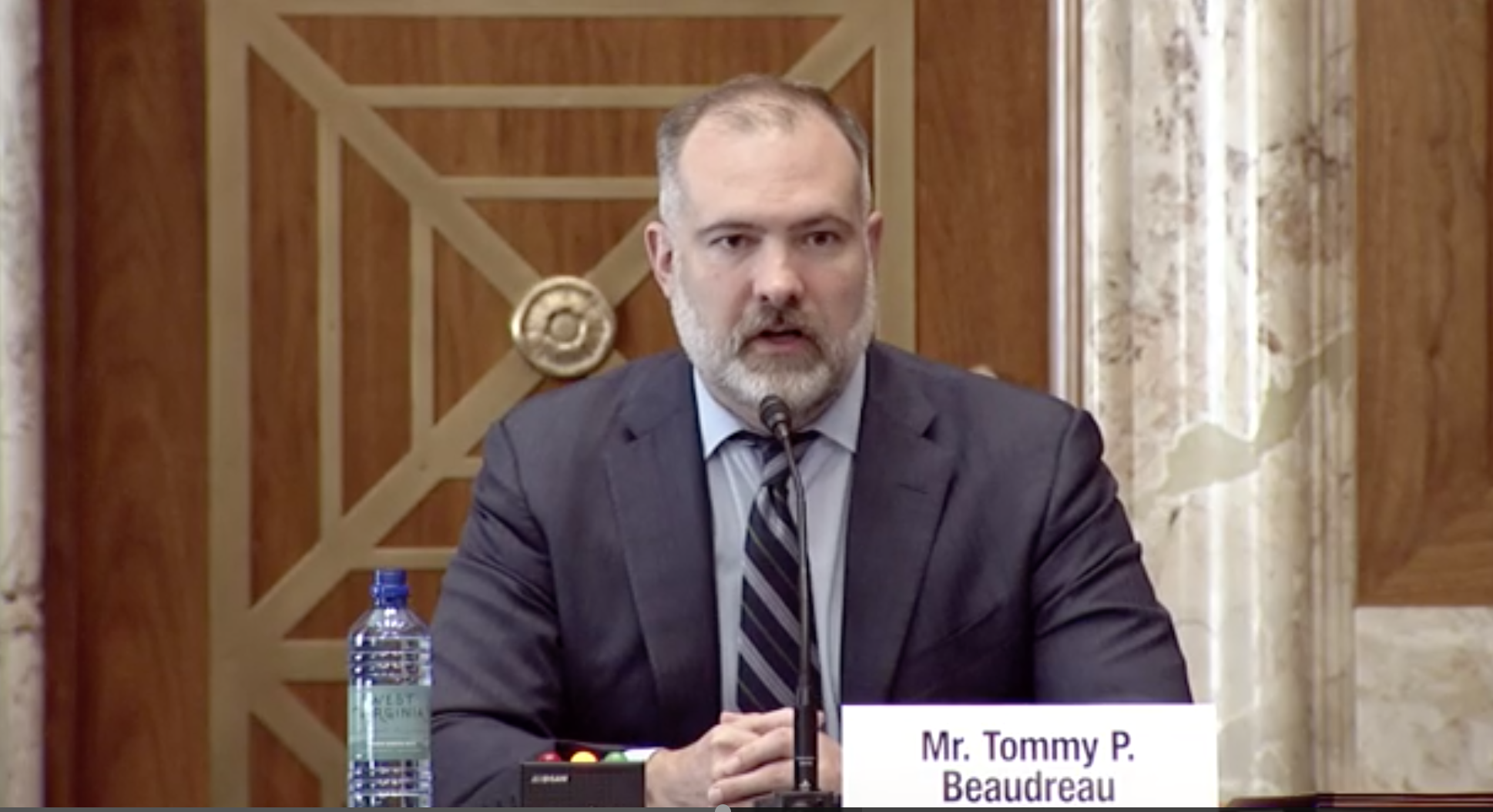
Revolver Spotlight: Tommy Beaudreau Is Big Oil’s Back Door to Biden’s Interior
President Biden nominated Tommy Beaudreau to be his Deputy Secretary of the Department of the Interior last April, and he was confirmed to the position by June. Unfortunately, though Biden seeks to be seen as a climate champion, Beaudreau was, and is, a uniquely terrible choice to help helm a climate-focused administration. His revolving door record is extensive, his conflicts of interest are nearly unprecedented, and his (re)installment at the highest circles of the Department of the Interior was ultimately a win for oil and gas conglomerates.
January 20, 2022 | Revolving Door Project Newsletter
Eleanor Eagan Toni Aguilar Rosenthal
Newsletter 2020 Election/TransitionDe-TrumpificationExecutive BranchRevolving Door
One Year On
It has now literally been a year since President Biden officially took office, yet Donald Trump’s legacy lives on across the federal landscape. Trump’s threat to governmental stability and Democratic policy priorities particularly endure in the bad-actor figures his administration installed in termed positions and within the federal bureaucracy.
January 19, 2022
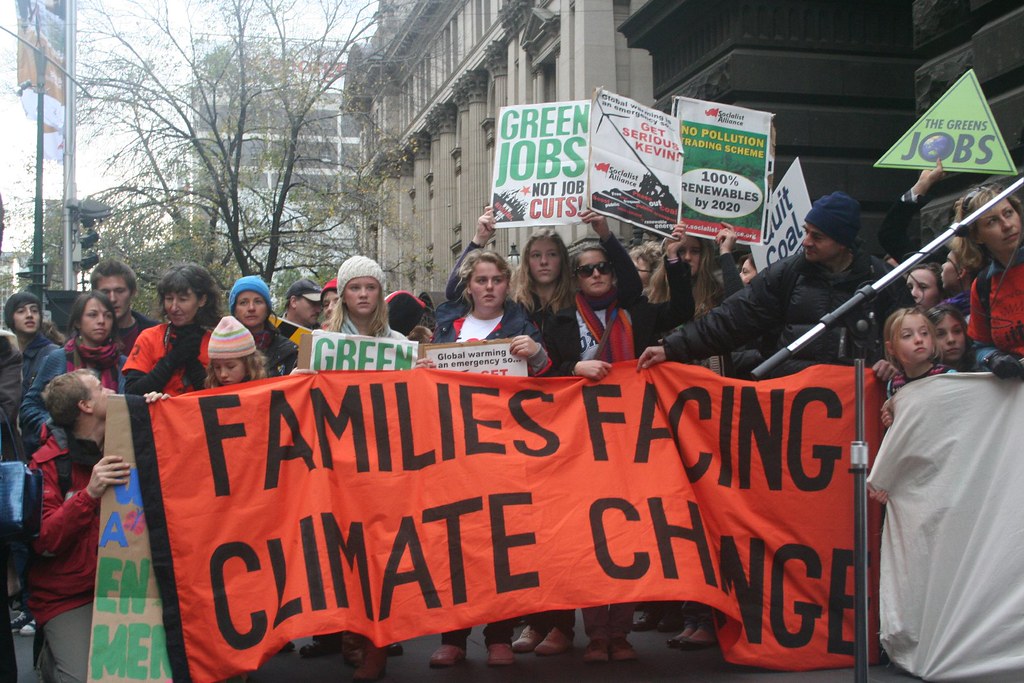
Climate Finance Capacity: Office of the Comptroller of the Currency
supervising all national banks, federal savings associations, and agencies of foreign banks. It primarily regulates the risk that banks can take on, delineates what is considered “banking,” and investigates banks’ balance sheets.
December 03, 2021
Active Revolving Door Between Government and Contracting Industry Could Threaten Reform
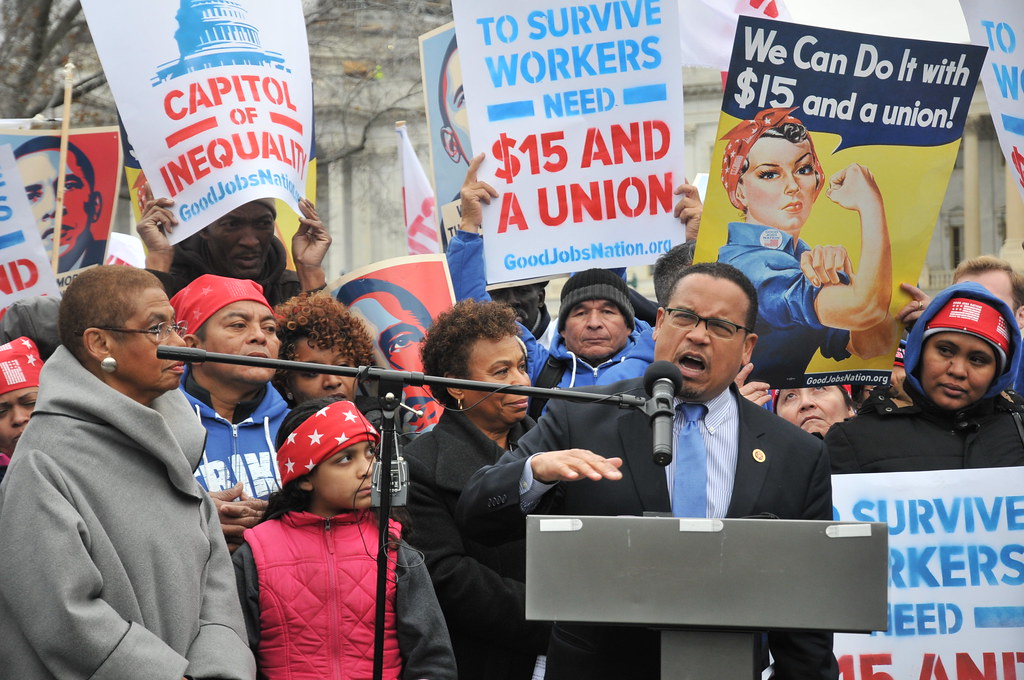
Officially speaking, the federal government employs just shy of 3.6 million people (2.2 in the civilian workforce and 1.4 in the military). In reality, however, the number of people whose paychecks originate with the federal government (through grants or service contracts) is much larger — around 12 million according to recent estimates. This workforce, and the contracts that sustain it, rarely get much attention in public discourse. Yet, the federal government’s power to set standards and direct funds through contracting is not an insignificant one. President Biden has begun to tap into those powers with directives to raise the minimum wage to $15/hour for federal contractors and institute a vaccine mandate for those same workers. These are strong first steps but they only scratch the surface of what is possible and what is needed to address the many problems that plague federal contracting. Fully harnessing that power, however, will likely require confronting a deep-seated problem: an active revolving door between the offices charged with granting and monitoring federal contracts and the companies that receive them.