
Of the many, interlinked crises that define American life in the 2020s, none is as literally existential as climate change. Biden’s first White House stint and the next presidential term will cover most of the remaining years the United Nations estimates Earth has to prevent catastrophic and irreversible global warming.
Incalculable, globally historic pain and suffering are already happening as a result of the climate crisis. Yet the forces of big business responsible — most especially the fossil fuel industry, but also Big Agriculture, the military-industrial complex, and others — continue to spend tens of millions every year blackmailing American leaders into softballing and even ignoring the literal end of the world as we know it.
The Revolving Door Project has taken a two-pronged approach to aid in the fight for government action at the speed and scale necessitated by the climate emergency. First, we have researched and raised alarms about the tools that polluting industries use to ossify the departments and regulatory agencies tasked with holding them accountable.
Around the 2020 election transition, we highlighted corrupt Trump appointee Andrew Wheeler’s degradation of the Environmental Protection Agency (EPA) in our collaborative “Swamp Tour” with the Progressive Change Institute. We tracked and exposed political contributions from influential fossil fuel figures in our Presidential Power Map. We raised alarms about fossil fuel allies sidling up to the Joe Biden campaign, as the Project’s Miranda Litwak and Max Moran wrote about in The Intercept, and the executive branch itself, as the Project’s Dorothy Slater wrote in our Fossil Fuel Industry Agenda. We pushed the Biden administration to nominate public interest-minded candidates for high-level political appointments, while exposing the rip current of Trump holdovers and industry-aligned appointees working against the administration’s best impulses.
We pointed out under-utilized powers, such as the EPA’s ability to refer other agencies’ environmentally damaging decisions to the White House Council on Environmental Quality for review and inter-agency mediation, in contexts like the Tennessee Valley Authority’s corrupt disregard for the imperative of decarbonizing our energy supply, and the Federal Energy Regulatory Commission’s obsequiousness to the oil and gas industry’s reckless expansionism.
We exposed how fossil fuel company lawyers were urging the Supreme Court to skirt ethics requirements in order to suppress state and city-led lawsuits against oil and gas majors, after pushing Biden’s Justice Department to reverse Trump-era amicus briefs in those cases siding with the fossil fuel defendants.
We examined the hydrogen industry players poised to make billions from the Inflation Reduction Act’s clean hydrogen tax credit, and their influence campaign to weaken the safeguards for that tax credit’s implementation, in our Hydrogen Industry Agenda Report. And we investigated one of the latest greenwashing plays from the gas industry—”certified” or “differentiated” gas—as they sought to influence ongoing methane rulemakings from the Biden administration and charge utility customers premiums, research which was cited by Senator Markey in an oversight letter to the Federal Trade Commission calling for an investigation of oil and gas marketing claims.
Second, we have also sought to show that climate change is a whole-of-government problem, just as it is a whole-of-society problem. Scattered across the executive branch are far more powers and appointees relevant to saving the planet than just those in the EPA or Department of Energy (DOE). As our Jeff Hauser told Kate Aronoff, “You could have the best EPA Administrator in the world. If they get overruled by OMB or NEC, it’s kind of irrelevant how good they are or how hard they fight.”
For example, financial regulators, mainly those who sit on the powerful Financial Stability Oversight Council (FSOC), can set rules to disincentivize lending to climate-degrading industries and to protect the financial system from climate risk, as we described in our “FSOC 101” explainer. BlackRock, the world’s largest investor in fossil fuels, aggressively lobbied little-known regulatory agencies which still have seats on FSOC to insulate it from a level of oversight which could have substantially changed its behavior. We have been at the forefront of calling out BlackRock’s practice of hiring Democrats in an effort to “greenwash” their brand, as well as pushing regulators like Treasury Secretary Janet Yellen (as leader of FSOC) to step up and regulate BlackRock as it should be regulated.
The Revolving Door Project aims to keep this kind of deep inside-game from being exploited. To that end, we’ve integrated climate change into all of our other lines of inquiry into corporate capture of the executive branch. Most of the world had never heard of Larry Summers’ horrific record on climate issues until RDP wrote about it and shared our research with allies. Now, his history of wrist-slapping the fossil fuel industry played a key role in the surge of pushback that led him to officially refuse any job in a Biden administration. Similarly in the case of Alex Oh, a corporate lawyer who defended the likes of ExxonMobil, Fannie Mae, Bank of America, and Pfizer. Oh resigned less than a week after being appointed as the Security and Exchange Commission’s (SEC) Enforcement Director, citing “developments” in the case where she defended ExxonMobil against Indonesian villagers citing torture and implying she would prefer not to deal with the inevitable bad press. This came soon after a letter from RDP and other progressive groups urging SEC Chairman Gary Gensler to revoke the appointment and our research publicizing the extent of Oh’s legal career.
Between the success of keeping Alex Oh out of government (which led the NY Post to blast us as a “good-government group” who put “a progressive bullseye on her back”) and our work successfully pressuring Gensler to clear house at the Public Company Accounting Oversight Board (PCAOB) (infuriating those at the Wall Street Journal), it’s clear we are making the right people mad.
Whether it’s installing Department of Justice (DOJ) officials ready to prosecute polluters to the fullest extent of the law, or setting new rules at the Office of Management and Budget (OMB) to screen all government spending projects for climate equity, there are considerable actions the executive branch can take to reorient our governance around the overriding need to protect our planet. Max Moran detailed several of these for The American Prospect in July of 2020. There are also important gatekeepers scattered across the executive branch which environmentalists must know how to overcome to get the change we desperately need: the most prominent of these is the Office of Information and Regulatory Affairs (OIRA), which our Jeff Hauser wrote about in September of 2019.
In addition, RDP has drawn attention to the influential role of the Federal Reserve, which is a key climate policymaker whether or not it identifies as such. We helped lead the noisy, albeit ultimately unsuccessful, fight against the renomination of Fed Chair Jerome Powell, citing the former private equity executive’s affinity for Wall Street and lax approach to financial regulation. A vindicated RDP has subsequently criticized Powell for both his regulatory inaction, which has kept the U.S. at the bottom of the international ranks when it comes to mitigating climate-related financial risks, and for his unwarranted campaign of interest rate hikes, which has constrained the green economic transition while doing little to alleviate profit-driven inflation.
Notably, the forces arrayed against climate action are more sophisticated than just oil lobbyists and pipeline executives. Too often, individuals with seemingly strong climate credentials revolve out of government and into influence-industry positions secretly funded by the fossil fuel industry — be they think tanks, academic institutions, or the greenwashing divisions of major investment corporations — or to corporation-defending BigLaw firms, as we highlight in our BigLaw series. These seemingly upstanding institutions provide moral cover to the allies of Big Oil, allowing them to list an employer which sounds more respectable than ExxonMobil or Shell, even if those companies are the ones really paying the bills.
The Revolving Door Project aims to expose these front groups, and prevent anyone willing to take under-the-table cash from the fossil fuel industry from exerting power in the federal government again. We will not shy away from criticizing those loyal to BigLaw firms and their corporate, fossil fuel giant clients, like Michael Connor, who is leading the Army Corps of Engineers, or Todd Kim, the top environmental lawyer at the Justice Department.
We have also expanded our work on the climate crisis, and our oversight of climate’s biggest villains, into state-level work. Focusing primarily on state-level Attorneys General, we have begun interrogating what interests are funding some of the most powerful and influential actors at the state level, how that influences and informs state and national policy, and more.
We will continue to keep a watchful eye on the DOJ, call out those loyal to profit over climate like Mark Gallogly, push for Biden to utilize the most obscure aspects of his power (like appointing five new members to the Federal Retirement Thrift Investment Board, who could divest federal retirement money from fossil fuels), and spotlight little-known positions in places like the Treasury Department and the SEC which could have huge impacts on climate action.
The stakes of the climate crisis leave us morally obligated to use every tool in the executive toolbelt that can prevent irreparable harm, and to shield the government from anyone willing to accept anything less.
Below you will find some of the project’s writing and research on climate policy. For a selection of quotes and interviews on the topic, please visit this page.

February 20, 2026
Memo Climate and EnvironmentDOGEElon MuskExecutive BranchFEMAGovernanceGovernment CapacityHousingTrump 2.0
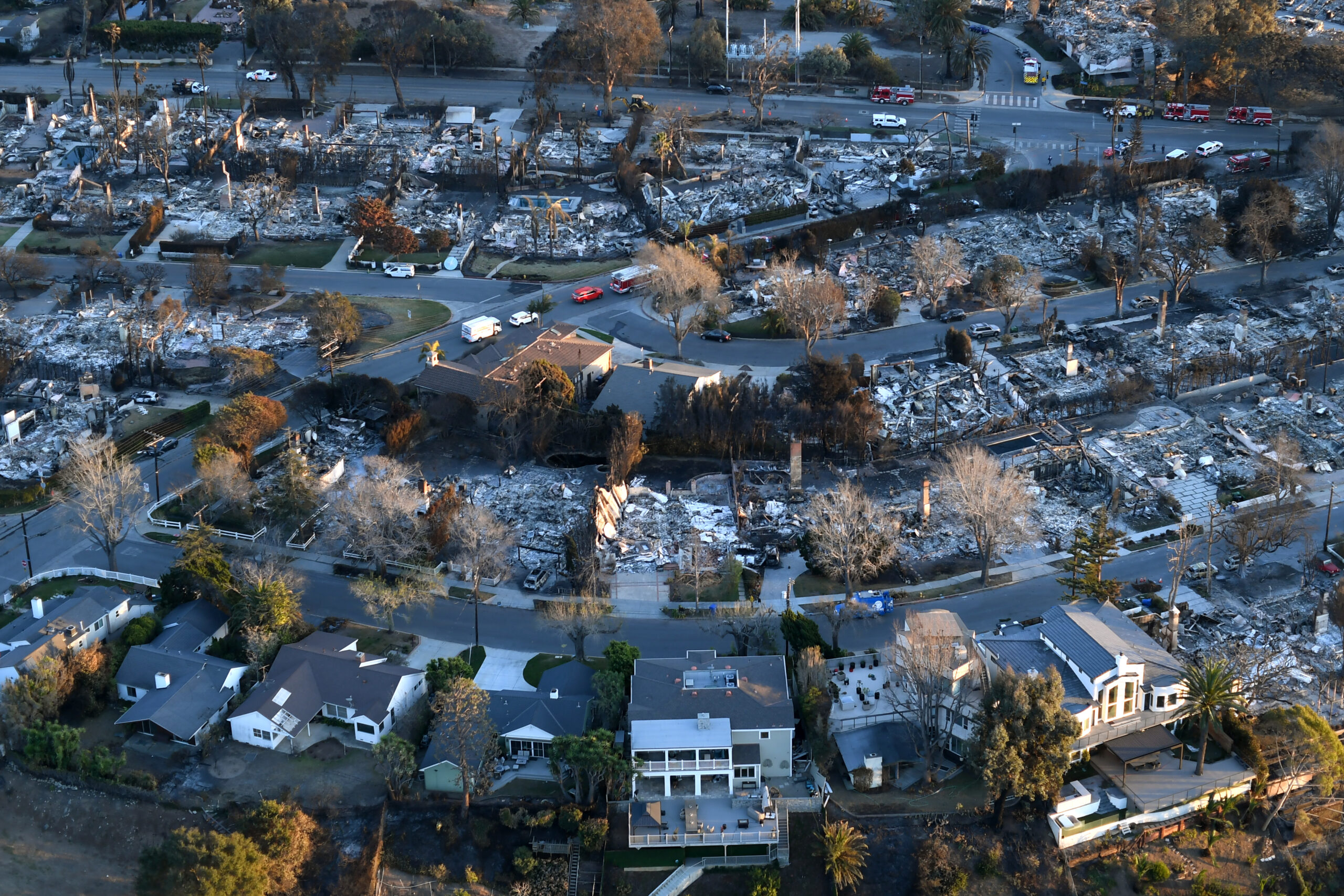
Map: Trump Has Often Delayed or Denied Disaster Aid
The Trump administration so far has refused to allocate federal disaster aid in a timely manner. Check out our interactive map for more details on the White House’s careless approach to major disaster declarations.
February 18, 2026 | Watchdog Weekly
Trump Already Decimated the EPA. It Wasn’t Enough for Big Business.
The repeal of the endangerment finding, supported by the Chamber of Commerce, is a final nail in the coffin for a debilitated EPA.

February 13, 2026
Chris Lewis Xaver Clarke Hannah Story Brown Emma Marsano Toni Aguilar Rosenthal KJ Boyle
Blog Post Artificial IntelligenceClimate and EnvironmentExecutive BranchTech
Tracking Uses of AI in the Trump Administration
As the Trump administration continues to expand the use of artificial intelligence (AI) in its operations, we are cataloguing examples of how AI is being deployed by federal agencies to replace human workers and undermine transparency and due process.
February 13, 2026 | The American Prospect
Doug Burgum, the Regime Toady of Our Time
According to Interior Secretary Doug Burgum, Donald Trump is the “king of PEACE”—an odd position for a Lutheran like Burgum, as it would rank Trump above the “Prince of Peace,” Jesus Christ—and Europeans should be “cheering” for him to annex Greenland. It’s also odd for the Interior secretary, whose duties principally concern federal lands, to be commenting on European opinion.

February 11, 2026 | Watchdog Weekly
Endangered Toad Says “ICE OUT”
Bad Bunny, the most streamed artist in the world for the last four years, has elevated el sapo concho’s profile by transforming the toad into a symbol of Puerto Rico’s imperiled cultural and ecological heritage. At a time of historic institutional cowardice towards combating climate change, he reminds us what the fight is about: nothing less than preserving our treasured places in the world, and those we share them with.
February 10, 2026
Blog Post Climate and EnvironmentCriminal JusticeEconomic PolicyEducationExecutive BranchHealthImmigrationTrump 2.0
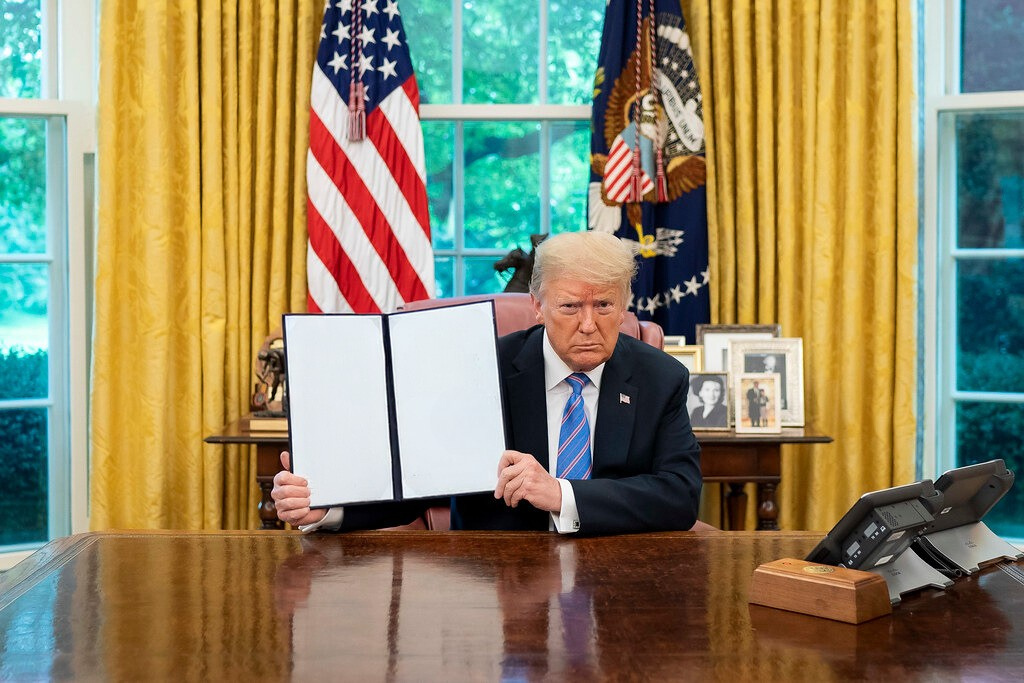
Trump’s War on Public Data
Trump’s antagonistic relationship with facts is well documented. His most egregious attacks on reality aren’t just rhetorical. They threaten physical safety and American democracy. They target the ways we define what we know about the country and ourselves. Trump’s assault on public data is not a side project, it’s a core feature of his authoritarian approach to governance. By hollowing out federal statistics, limiting information gathering, and redacting inconvenient reports, the Trump administration is warping reality to suit its political narrative. The goal isn’t just to obscure the effects of the president’s policies, it’s to prevent the public from seeing them at all.
February 09, 2026
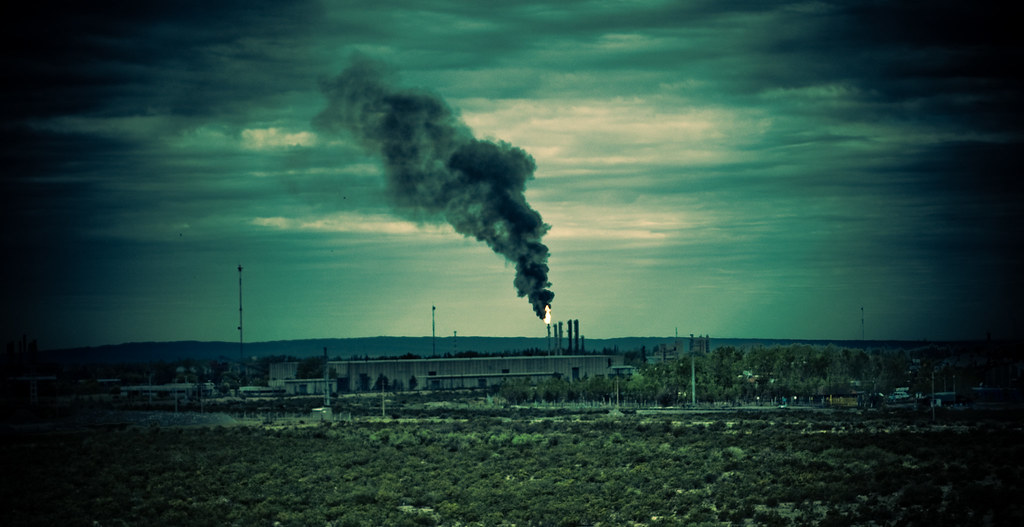
Tracking the Environmental Harms of Trump Actions
Trump’s second term began with drastic announcements on Day One and has been chaotic every day since. It can be overwhelming to try to keep up with the cuts to environmental funding, rollbacks to critical regulations, and track the thousands of staff across agencies who have been fired from their roles. The purpose of this tracker is to monitor some of the most important tangible increases in pollution and environmental and health harms caused by the Trump administration’s actions.
January 30, 2026 | Watchdog Weekly
Corruption Calendar Weeks 52-54: It's Big Techs World, We're Just Living In It
Trump administration sets up protection plans for Big Tech and Polluters at the public’s expense.
January 23, 2026 | Watchdog Weekly
Newsletter Climate and EnvironmentCorporate CrackdownDOGEElon MuskExecutive BranchIndependent Agencies
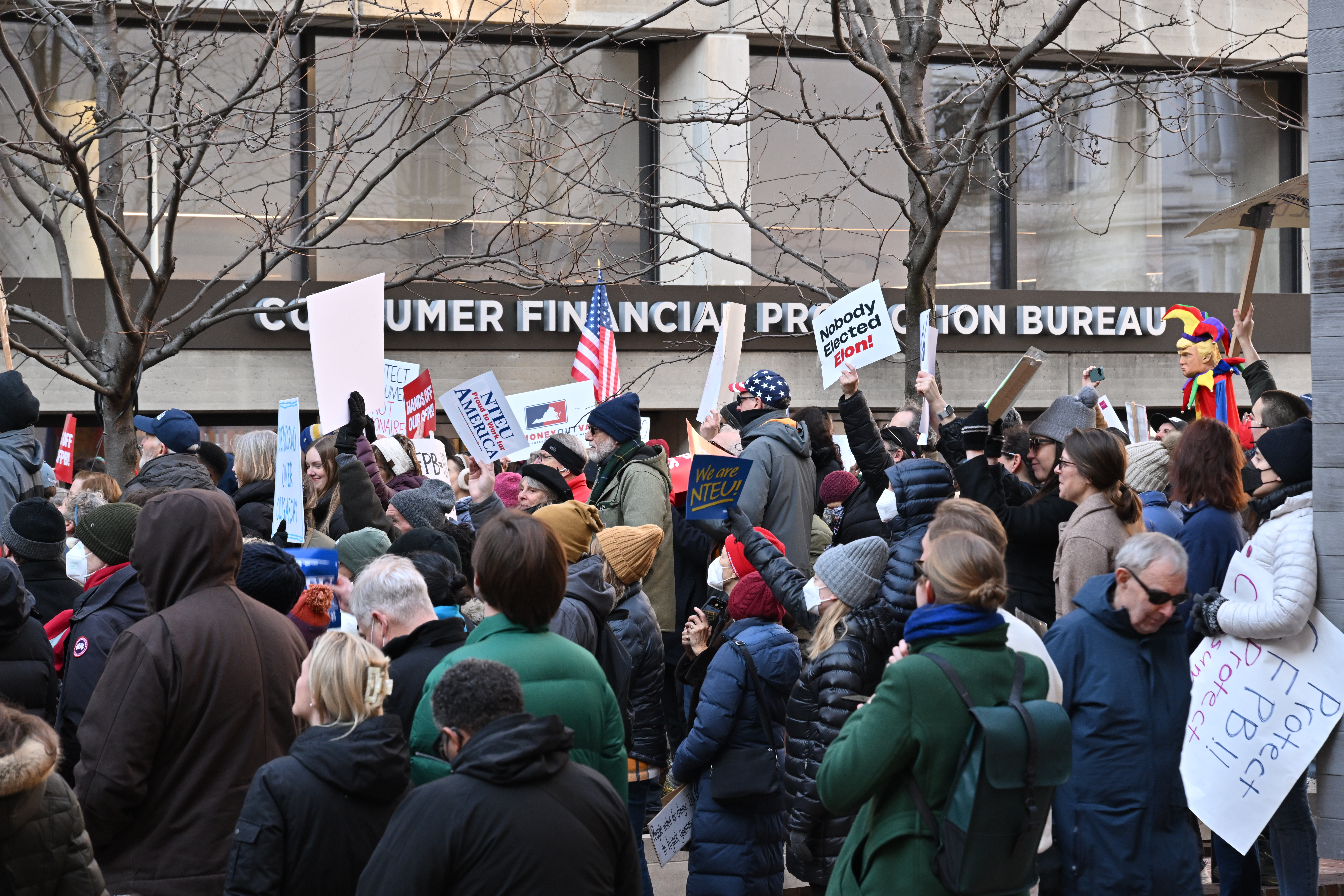
RDP Audits DOGE Destruction In New Report
In case you missed it, RDP just released a new report on the Department of Government Efficiency.
January 22, 2026 | Dollars & Sense Debrief
PODCAST: RDP's Kenny Stancil Discusses Home Insurance Profiteering on the D&S Debrief
Revolving Door Project senior researcher Kenny Stancil joined Economics for the People to discuss his recently published article, “Forsake Some, Fleece the Rest,” with Dollars & Sense editor Chris Sturr.

January 21, 2026
Newsletter Anti-MonopolyArtificial IntelligenceClimate and EnvironmentConsumer ProtectionEconomic PolicyGovernanceHousingTechTrump 2.0
AI Is Making Your Life More Expensive
Big Tech is driving up the costs of necessities—now and in the future.
January 20, 2026
KJ Boyle Xaver Clarke Julian Scoffield Chris Lewis
Climate and EnvironmentCorporate CrackdownDOGEElon MuskExecutive BranchIndependent Agencies
DOGE: From Meme to Government Erosion Machine
DOGE: From Meme to Government Erosion Machine serves as a recounting of DOGE’s first year. We outline DOGE’s operational takeover and systemic demolition of the federal government. We hope this effort to record the scale of DOGE’s destruction engenders much needed accountability for all who enacted and cheered the initiative’s irrational actions.

January 09, 2026
Memo Climate and EnvironmentDOGEElon MuskExecutive BranchFEMAGovernanceGovernment CapacityHousingTrump 2.0
TRACKER: Trump's Disastrous Disaster Policy
We are tracking how the Trump administration’s callous policy choices, before and after bouts of extreme weather, exacerbate avoidable suffering and death.
January 09, 2026 | The American Prospect
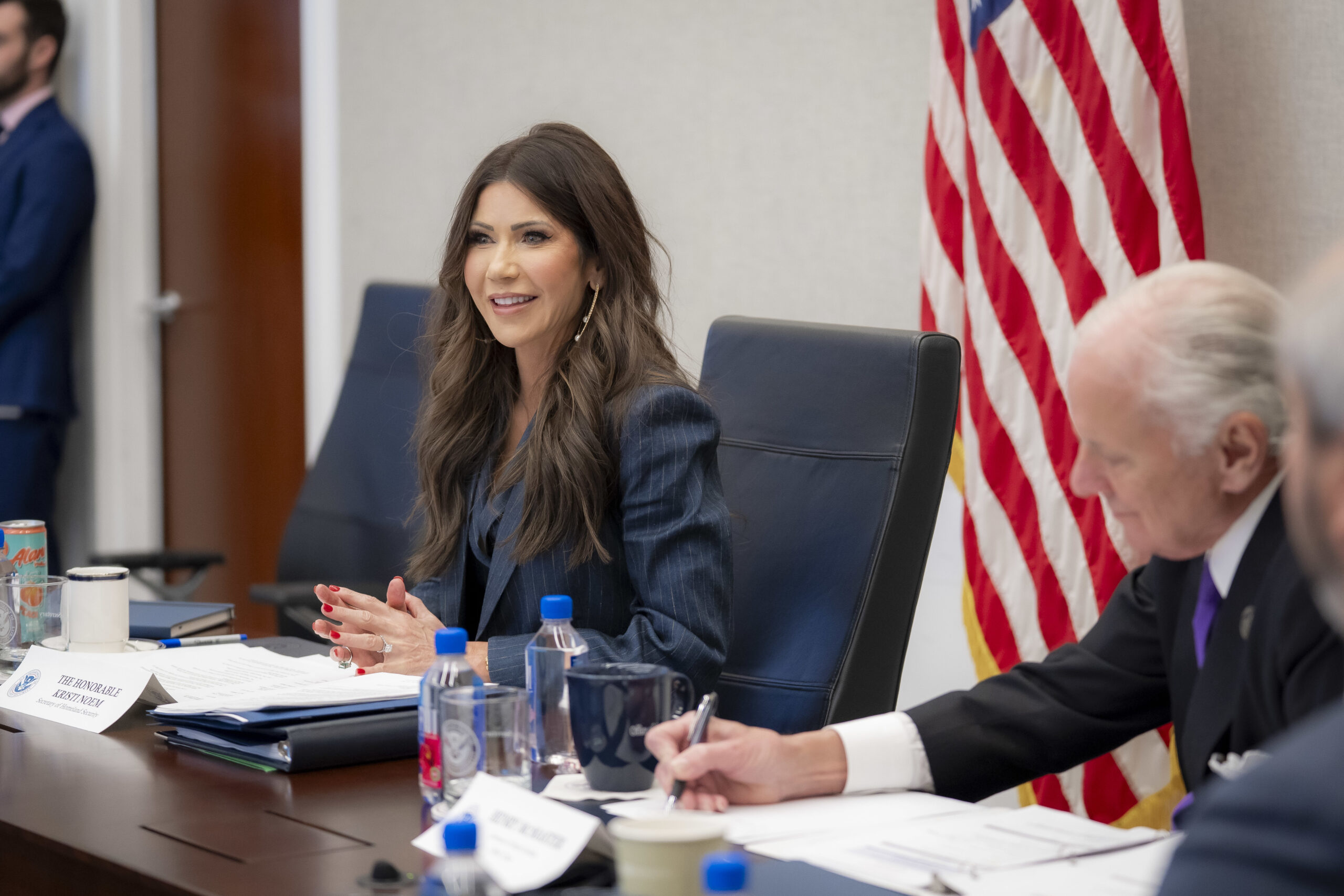
The Trump Regime Is Making Disasters Worse
DHS Secretary Kristi Noem sat atop millions of dollars in flood prevention grants while the West Coast was being inundated. Now she’s slashing FEMA disaster response staff.

January 06, 2026
Memo Climate and EnvironmentDOGEElon MuskExecutive BranchFEMAGovernanceGovernment CapacityHousingTrump 2.0
Timeline: Trump's Attacks on Disaster Preparedness and Response
The Trump administration has been criminally negligent when it comes to disaster mitigation and response. Check out our interactive timelines documenting the White House’s pre-disaster recklessness and post-disaster cruelty.